Showing posts with label watercolor painting techniques. Show all posts

Friday, July 12, 2019

2019 State Fish Art Contest

I've written about the State Fish Art Contest before (see posts here) because I feel like it, along with the Jr Duck Stamp, are great programs that merge art and science. It's always a choice for my students to complete the art and an additional choice on if they want to enter the contest or not. This year I only had 3 students choose to enter... and 2 were my own children! My kids worked on their projects over spring break and it was a good distraction from screens since spring break in Kansas is usually too cold to do much outside.
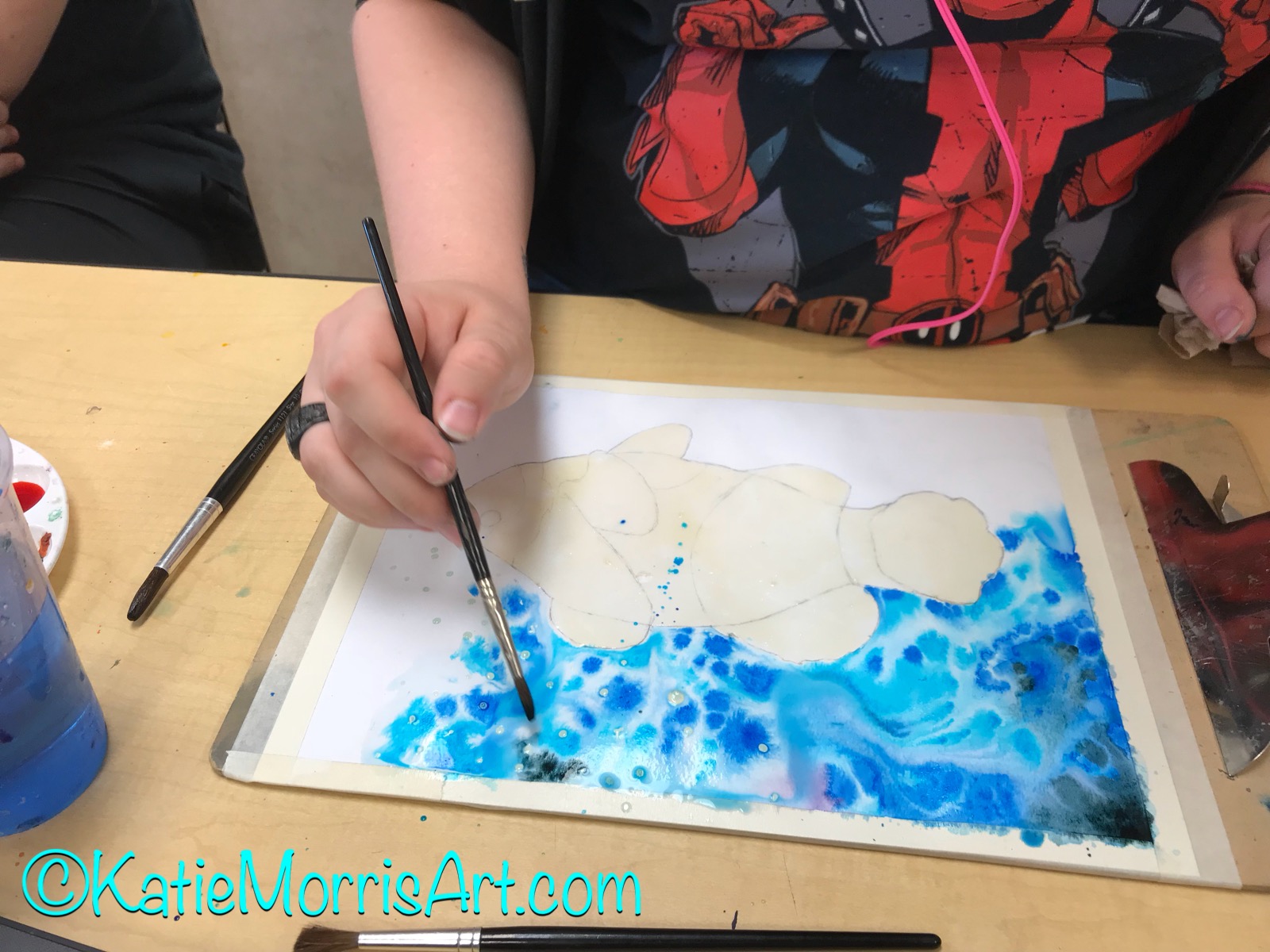
My oldest son chose the Colorado state fish- the greenback cutthroat trout. He had watched me using watercolors a few months before so he was excited to try out some techniques. He drew the fish and used masking fluid to trace the outline. He used a wet on wet technique to paint the water, letting drops of color fall on the wet paper and then sprinkled coarse sea salt and some table salt on the wet paint to create a pretty cool effect.
When the background was dry, he painted the body of the fish and later used colored pencils to add details.
Showing off his finished painting
My middle son used a wax resist technique, adding watercolor over his crayon drawing of a channel catfish.
Some states have a lot more participation in this program than others. It is not well known in Kansas but it is a worthwhile program, especially if you have students or children of your own interested in wildlife, conservation, or environmental science.

Tuesday, February 19, 2019

Favorite New Watercolor Technique

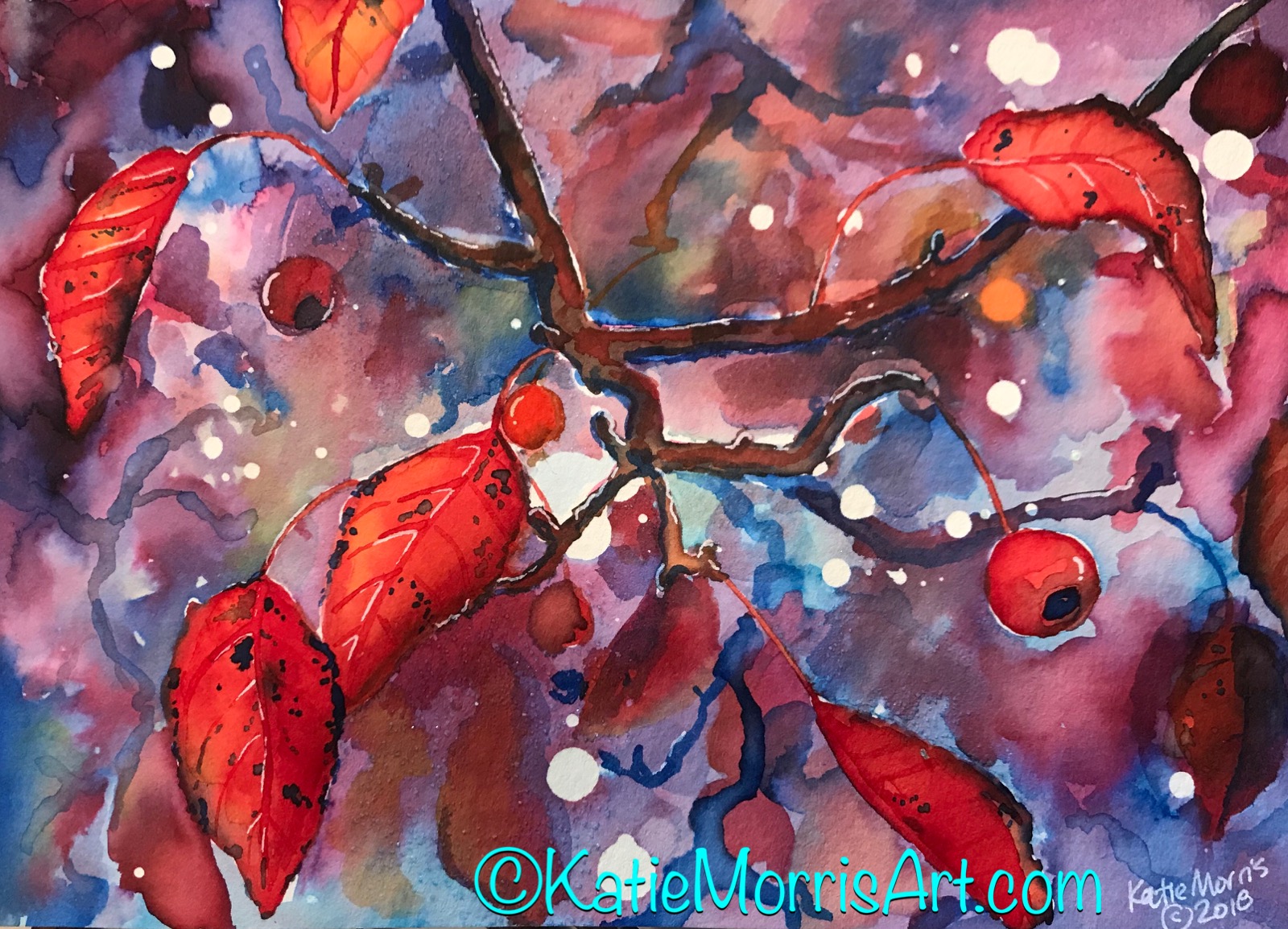
Last September I attended a watercolor workshop in my hometown where we learned to embrace the loose, flowy nature of the medium using Japanese techniques. We started by sketching the focal point and using masking fluid to cover it. It’s also nice to let some drops of masking fluid fall on the Negative space to create some highlights. When that was dry (do not use a blow dryer to speed it up), we wet the paper and just waited for it to lose the sheen. Next, we applied red, yellow, and blue watercolors (we mixed tube watercolor with water in little cups aiming for a medium value), allowing the colors to mix and bleed together. We added more paint in certain areas trying to match the light and dark zones from the reference picture. As the paint dries you can go back and work to define the negative space. An example would be making the background darker around the shape of a leaf. This is usually more interesting than just painting the positive space. Eventually you remove the masking fluid and paint the focal point in a more controlled manner.

I really enjoyed this technique and since I realized I needed to do a better job of selling watercolor  to my students, I made a small watercolor painting part of our painting bootcamp. I have the students 5x7 inch pieces of watercolor paper and asked them to choose a simple subject for the focal point that could have a flowy background, like a flower or an animal. We used sax liquid watercolors dispensed I go palettes and I also let the students sprinkle salt on the wet paint if they wanted to try out that effect. We have table salt at school but lately I’ve been adding a bit of sea salt or kosher salt at home and I like how the bigger crystals make a different look.

I enjoye this process so much that I used it as the hands-on portion of a TSB workshop I co-presented at the 2018 Kansas Art Education Association fall conference.


Masking fluid can be kind of expensive but I’ve found that you really only need 2 or 3 bottles since the students will be ready for it at different times and can share. I’ve also been told that it doesn’t last forever so you shouldn’t really buy more than you’ll use in a year.
What is your favorite watercolor technique to teach?
One of the art teacher workshop participants created this flower.

Here are a few of the small paintings I've created practicing this technique.

My student's finished clownfish