Showing posts with label high school TAB. Show all posts

Tuesday, February 4, 2020

Painting: Trying to Loosen Up

Once upon a time, I stopped painting. Frustrated that I couldn’t get my paintings to look “right” (read: real), I stepped away for a while. 
Most of the artwork to which I’d been exposed was a realistic style so in my mind that was the kind of art that was good. When I was given the opportunity to learn and see more of art history and realize that there are lots of different styles I was able to loosen up and come back to painting. 

This is my 5th year in my current teaching position and I have observed the majority of students working on paintings being very tight trying to force a realistic style. The students also struggled to work with acrylic quickly enough and ended up frustrated with trying to blend dried paint. One of my goals for introducing painting this year was to encourage them to loosen up, move more quickly, and understand their options for different styles and approaches. 

With watercolor we tackled landscapes. I gave students the option of following along with me in a guided painting or working on their own landscape. I wanted them to have a basic understanding of landscapes without spending weeks on an acrylic painting like has been the tradition. We used wet on wet and other techniques to get the main composition laid out the first day then the 2nd was spent on adding layers for definition and texture. I asked the students to only make a few lines with pencil for a guide before starting opposed to drawing every little detail and talked about embracing the nature of watercolor- water likes to stick to other water!

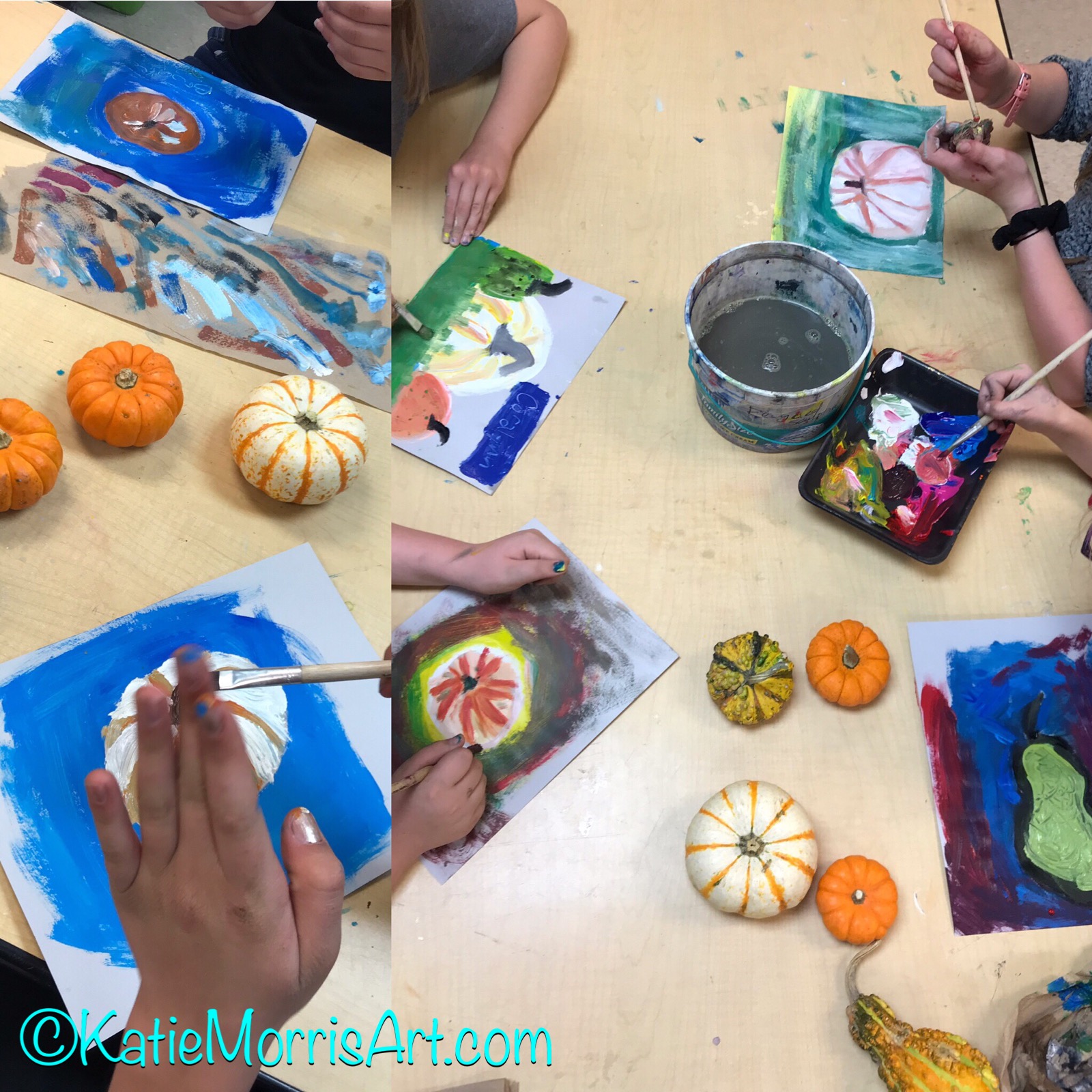
Before the students started on their 16x20 canvas paintings, we did a couple of exercises with opaque paint. First, we did a one class period “speed painting” challenge. I brought in a variety of miniature gourds with different colors and textures and students each chose one to observe and paint. Here are the rules- use only primary colors plus white and black. No pencils or drawing before painting. No washing your brush. I did about a 2 minute demo mixing paint directly on my paper and using my brush handle to make marks with a Sgraffito technique. While the students were hesitant at first they relaxed and had fun with it after a few minutes, besides a few that I’m still trying to help break free of perfectionism.


The 2nd exercise was a simple technique sampler. Students folded their paper into quarters and made tiny paintings with different techniques in each section: palette knife, dabbing, scraping (using a piece of mat board), and sgraffito. 

When the time came for students to begin their final paintings they had learned some new techniques to have at their disposal. I gave the themes of “object” and “shoes” as starting points but some branches off in different directions.

I feel like intentionally practicing techniques for loosening up, in addition to introducing different styles of art in the art genres unit made a big difference in the students’ confidence and willingness to try new approaches. 
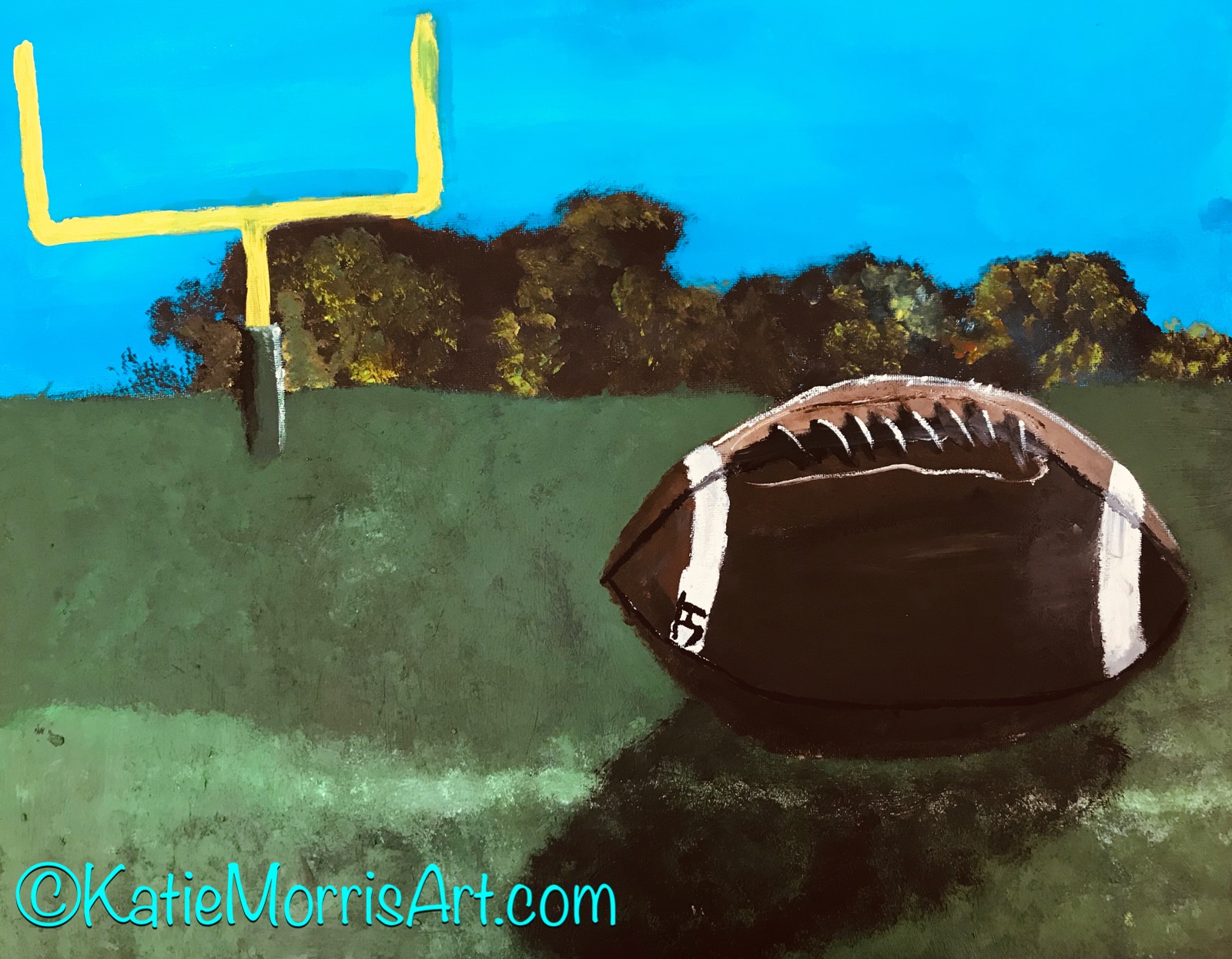
These paintings were created by a couple of freshmen boys who were not very comfortable with painting before.

A few students decided to paint candy still lifes. I pulled in Wayne Thiebaud when they were trying to figure out what to do with their shadows.

Not many takers on watercolor, but the couple that used it did a nice job.

This is the wall in our front office where I can display 10 16x20 inch paintings.
Do you find that your beginning students are stressed about realism? How do you help them to loosen up?

Wednesday, January 29, 2020

Jewelry Boot Camp

Spring semester in my intro high school class is usually organized by a theme for each month. But what do you do with March when you miss a full week for spring break and at least a couple other days for in-service, state basketball, etc? A couple of years ago, my answer was to run another boot camp/workshop on jewelry, introducing students to materials and techniques they could use and giving them 2 weeks to explore and create something.
Here is the slides presentation I put together with examples and links to the artist's websites.

And here are some examples of the students' work! They really seemed to enjoy learning about jewelry and having the opportunity to make something to wear or share with loved ones. 


Many students brought their own found objects in to work with.


I have a wire coiling gizmo that I purchased years ago and it is handy for making coils that can be cut into links for chain work. Of course, you can also wrap a dowel rod.

The wire coiling gizmo was also used for this piece.


We have an awesome Ag program in our school. One of my students used the equipment in the Ag shop to cut out a metal cross.

None of the materials we used were expensive- they were pretty much all scraps! The only purchases I made were some wire, cord, bails, and a rivet gun.


Here are some of the items we used: 
(If you make a purchase from these links I may get a small commission at no extra charge to you)

Saturday, January 4, 2020

Genres Around the Room


The basic tenants of a TAB (Teaching for Artistic Behavior) classroom are:
What do artists do? 
The child is the artist. 
The classroom is the child's studio. 

This school year before my high school students started their drawing boot camp, I wanted them to think about the first question on the list: What do artists do? 
I wanted them to understand some of the traditional categories of art and introduce some that they are less familiar/comfortable with so that when it was time for their first choice artworks, they would have a foundation to build on and some new ideas of what is possible do they could answer another question: What can I make? The Around the Room structure created by Cynthia Gaub worked really well to accomplish this goal.


Here is a list of the activities we did, although I did this before  the drawing/collage boot camp instead of after as I originally considered.


Portraits
For portraits I created some basic "how to" sheets with steps or notes about drawing facial features. I asked students to draw at least one nose, eye, and mouth for practice.

Students drew facial features on a head template to practice placement. I explained that observation is more important but the basic proportions are helpful to know so you can troubleshoot if something doesn't look right, or for when you are drawing from imagination/memory.

One of the activities was to finger paint a portrait of the student across from them. I forgot to tell my high school students not to paint ON each other so if you try this, learn from my mistake.

The last activity was to trace the contours of a magazine portrait. I know it sounds weird, but I explained to the students that it can help you build muscle memory and feel how the parts fit together.


Still Life
Somehow I didn't take any pictures of the still life activities, but here is what we did.
  1. I had a very busy still life scene set up with lots of found objects. Students were asked to zoom in, try different angles, etc. to practice composition in a photo.
  2. I set a little wooden chair on the table and asked students to draw the negative space instead of the positive. This was a difficult concept for them to understand- the empty space AROUND the chair instead of the chair itself. I explained that checking the negative space is a handy tool when drawing because it can help you figure out size relationships.
  3. Contour line drawing- I had a collection of objects on the table and asked students to choose one to draw the contours of, focusing on accurate observation. Learning to see is an important skill not just in art and even my students who prefer to draw from imagination tend to be more confident when they have a foundation in observation.
  4. I pulled out the tub of wooden forms that includes cones, pyramids, cubes, spheres, etc. and students practiced drawing them with depth. (Later in drawing bootcamp we talked more about perspective.)
Landscapes
Students had two activities for landscapes. First was to make a torn paper collage with background, middle ground, and foreground.
The 2nd was to use the ProCreate app to make a digital landscape using layers. We don't have enough iPads for everyone so some worked with a partner.

Abstraction
My example of breaking a composition down to simplify into abstraction.
The first type of abstraction the students practiced was through simplification. The students chose their favorite photo from the still life composition practice and abstracted it. This was also a difficult concept for them to grasp! I was talking to my teaching neighbor after school and he suggested showing the scene from Inside Out where they enter "abstract thought". I showed the clip the next day to reteach but I wish I'd thought to show it first!

The 2nd activity in this category was nonobjective vs abstract. I had cut sections of magazine pictures out that were interesting in terms of color, texture, lines, etc. but were just a small part so you could not tell what the original thing was, and glued them in the middle of a piece of paper.  The students used their choice of drawing supplies to start with the magazine piece and fill in the rest of the paper creating a nonobjective design.
Imagination
The imagination activity was included in the same day as the abstract/nonobjective. Students went to www.artprompts.org and made a drawing based on one of the prompts. Artprompts.org gives you ideas of something to draw that aren't easily google-able. 

Reflection
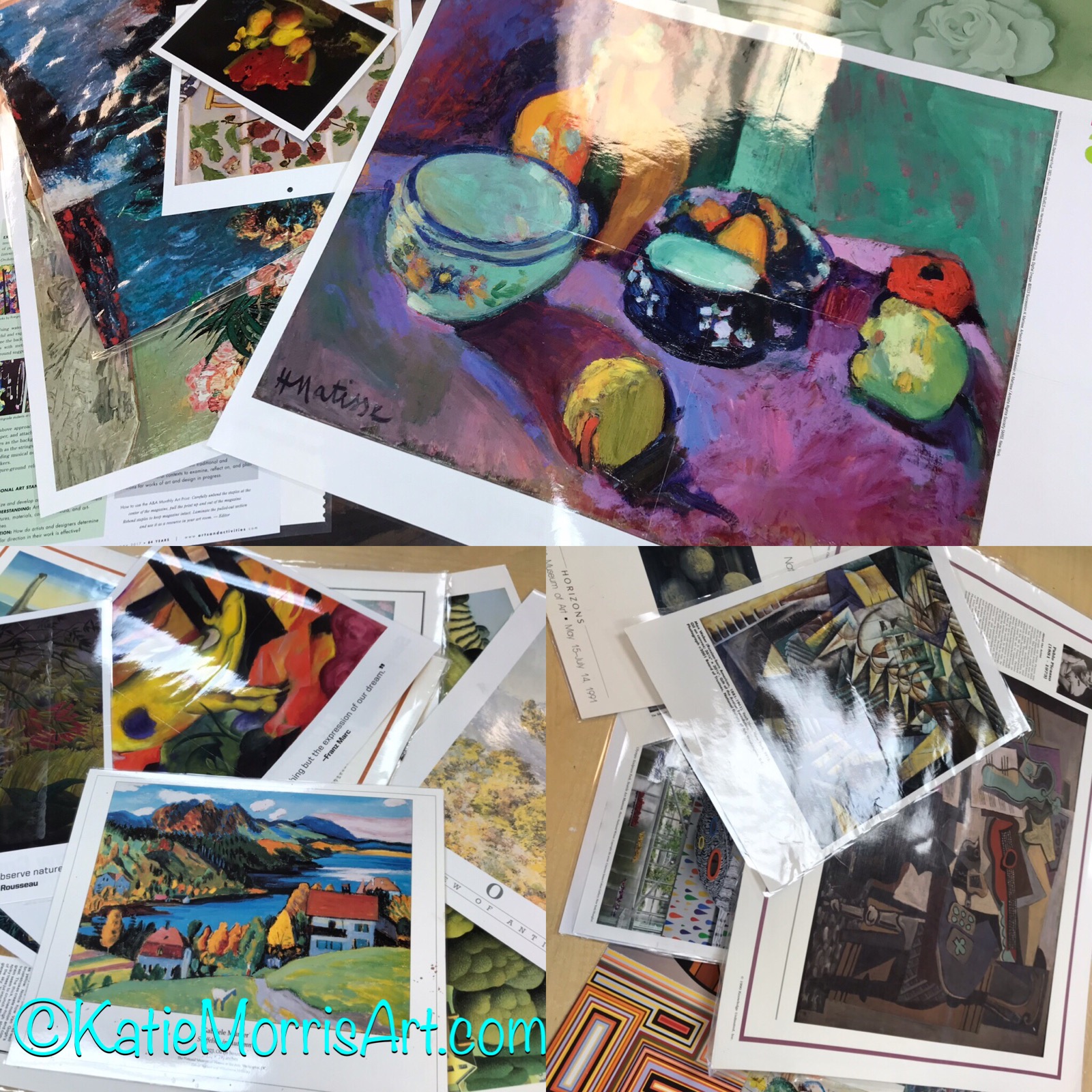
On the last day I set out art prints organized by genre on different tables. Students rotated through each genre and wrote about their favorite piece. At the end I asked them to think about their favorite genre and why they like it. After our drawing/collage boot camp, students created work and identified the genre within which it fit.


My favorite part of the reflection was when a student that had been complaining about having to try abstraction for a day, realized he chose the most abstract example in each genre as his favorite. It's fun to challenge students' notions about art!