Showing posts with label observation. Show all posts

Tuesday, February 4, 2020

Painting: Trying to Loosen Up

Once upon a time, I stopped painting. Frustrated that I couldn’t get my paintings to look “right” (read: real), I stepped away for a while. 
Most of the artwork to which I’d been exposed was a realistic style so in my mind that was the kind of art that was good. When I was given the opportunity to learn and see more of art history and realize that there are lots of different styles I was able to loosen up and come back to painting. 

This is my 5th year in my current teaching position and I have observed the majority of students working on paintings being very tight trying to force a realistic style. The students also struggled to work with acrylic quickly enough and ended up frustrated with trying to blend dried paint. One of my goals for introducing painting this year was to encourage them to loosen up, move more quickly, and understand their options for different styles and approaches. 

With watercolor we tackled landscapes. I gave students the option of following along with me in a guided painting or working on their own landscape. I wanted them to have a basic understanding of landscapes without spending weeks on an acrylic painting like has been the tradition. We used wet on wet and other techniques to get the main composition laid out the first day then the 2nd was spent on adding layers for definition and texture. I asked the students to only make a few lines with pencil for a guide before starting opposed to drawing every little detail and talked about embracing the nature of watercolor- water likes to stick to other water!

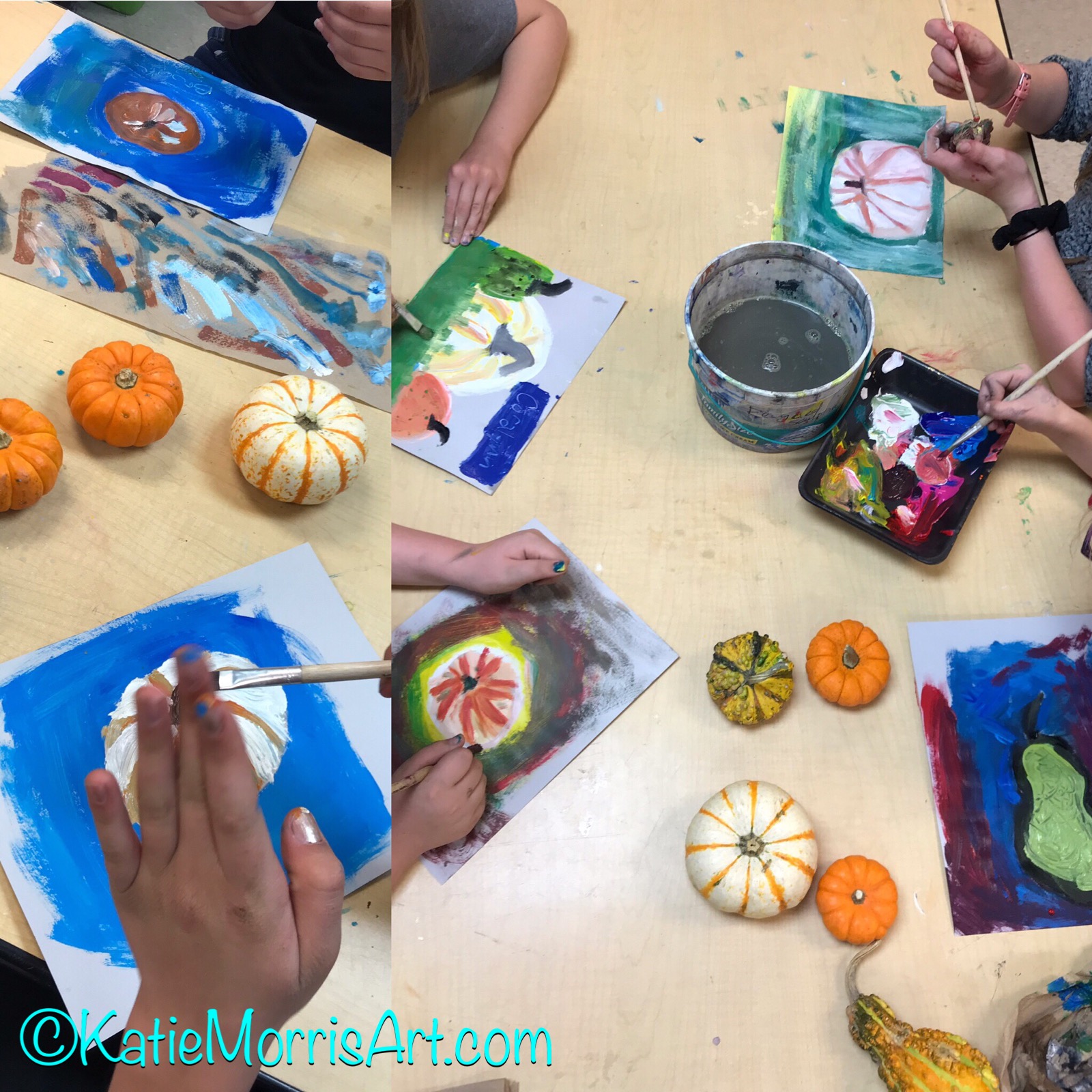
Before the students started on their 16x20 canvas paintings, we did a couple of exercises with opaque paint. First, we did a one class period “speed painting” challenge. I brought in a variety of miniature gourds with different colors and textures and students each chose one to observe and paint. Here are the rules- use only primary colors plus white and black. No pencils or drawing before painting. No washing your brush. I did about a 2 minute demo mixing paint directly on my paper and using my brush handle to make marks with a Sgraffito technique. While the students were hesitant at first they relaxed and had fun with it after a few minutes, besides a few that I’m still trying to help break free of perfectionism.


The 2nd exercise was a simple technique sampler. Students folded their paper into quarters and made tiny paintings with different techniques in each section: palette knife, dabbing, scraping (using a piece of mat board), and sgraffito. 

When the time came for students to begin their final paintings they had learned some new techniques to have at their disposal. I gave the themes of “object” and “shoes” as starting points but some branches off in different directions.

I feel like intentionally practicing techniques for loosening up, in addition to introducing different styles of art in the art genres unit made a big difference in the students’ confidence and willingness to try new approaches. 
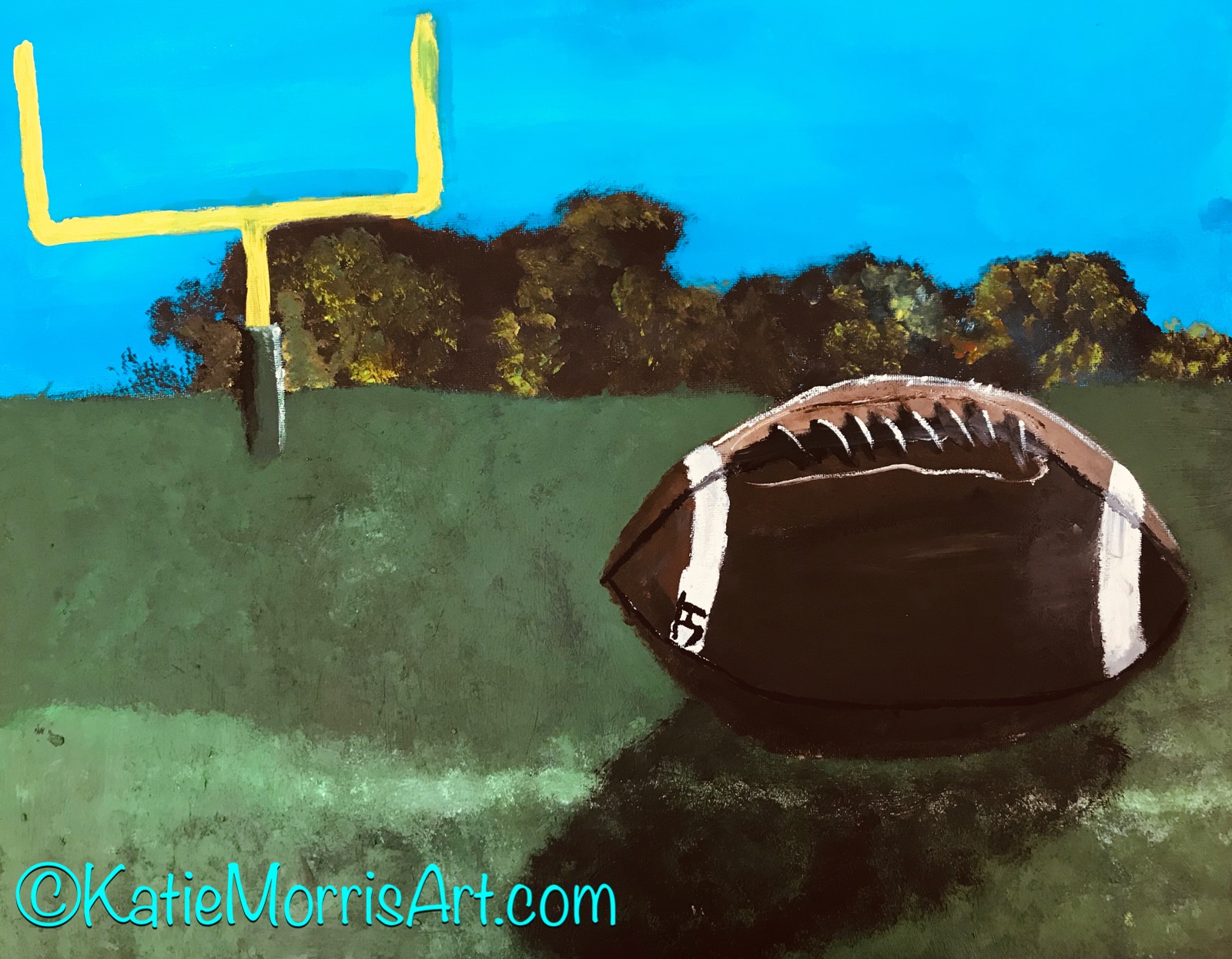
These paintings were created by a couple of freshmen boys who were not very comfortable with painting before.

A few students decided to paint candy still lifes. I pulled in Wayne Thiebaud when they were trying to figure out what to do with their shadows.

Not many takers on watercolor, but the couple that used it did a nice job.

This is the wall in our front office where I can display 10 16x20 inch paintings.
Do you find that your beginning students are stressed about realism? How do you help them to loosen up?

Sunday, November 17, 2019

8th grade Hand Observations


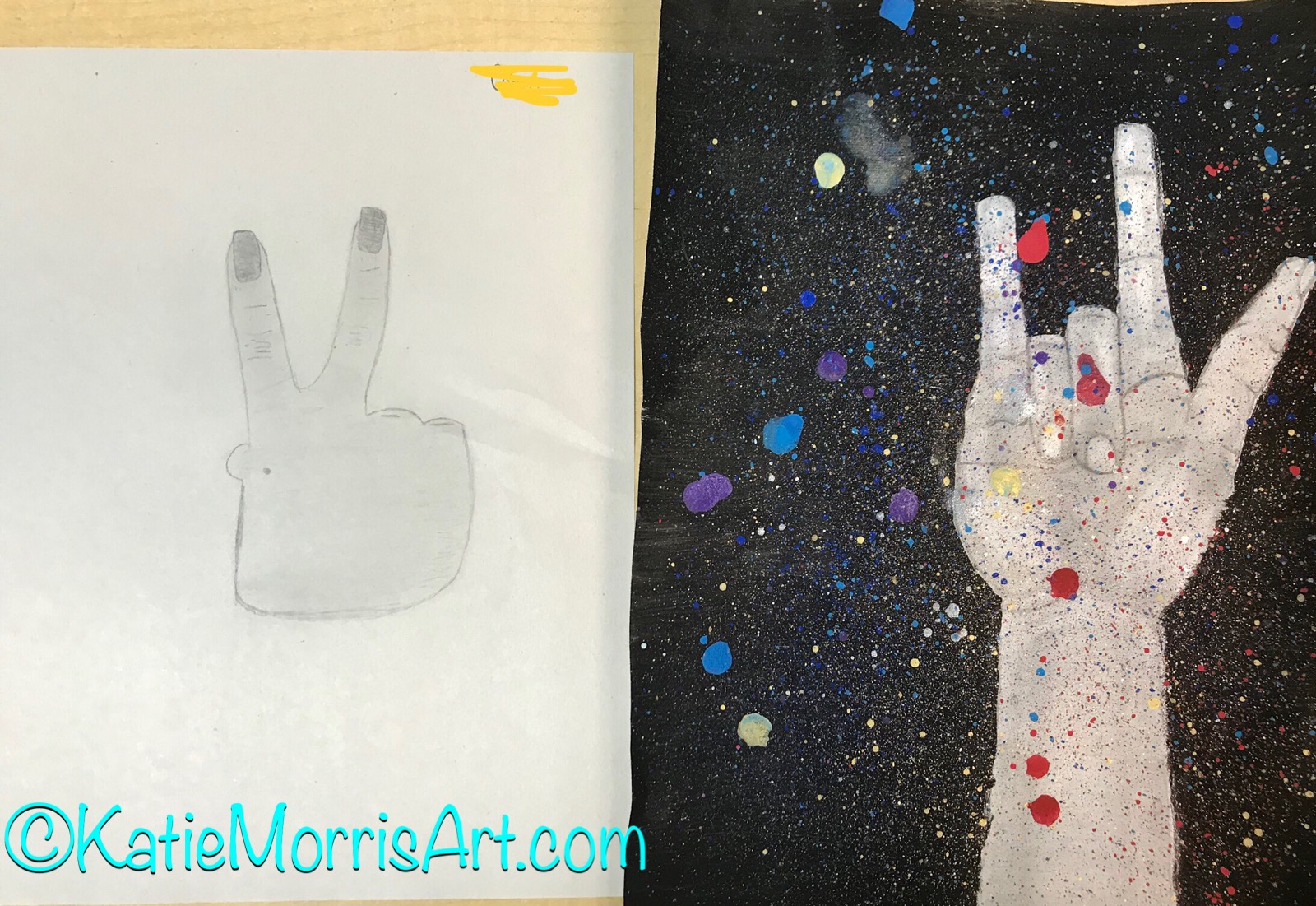
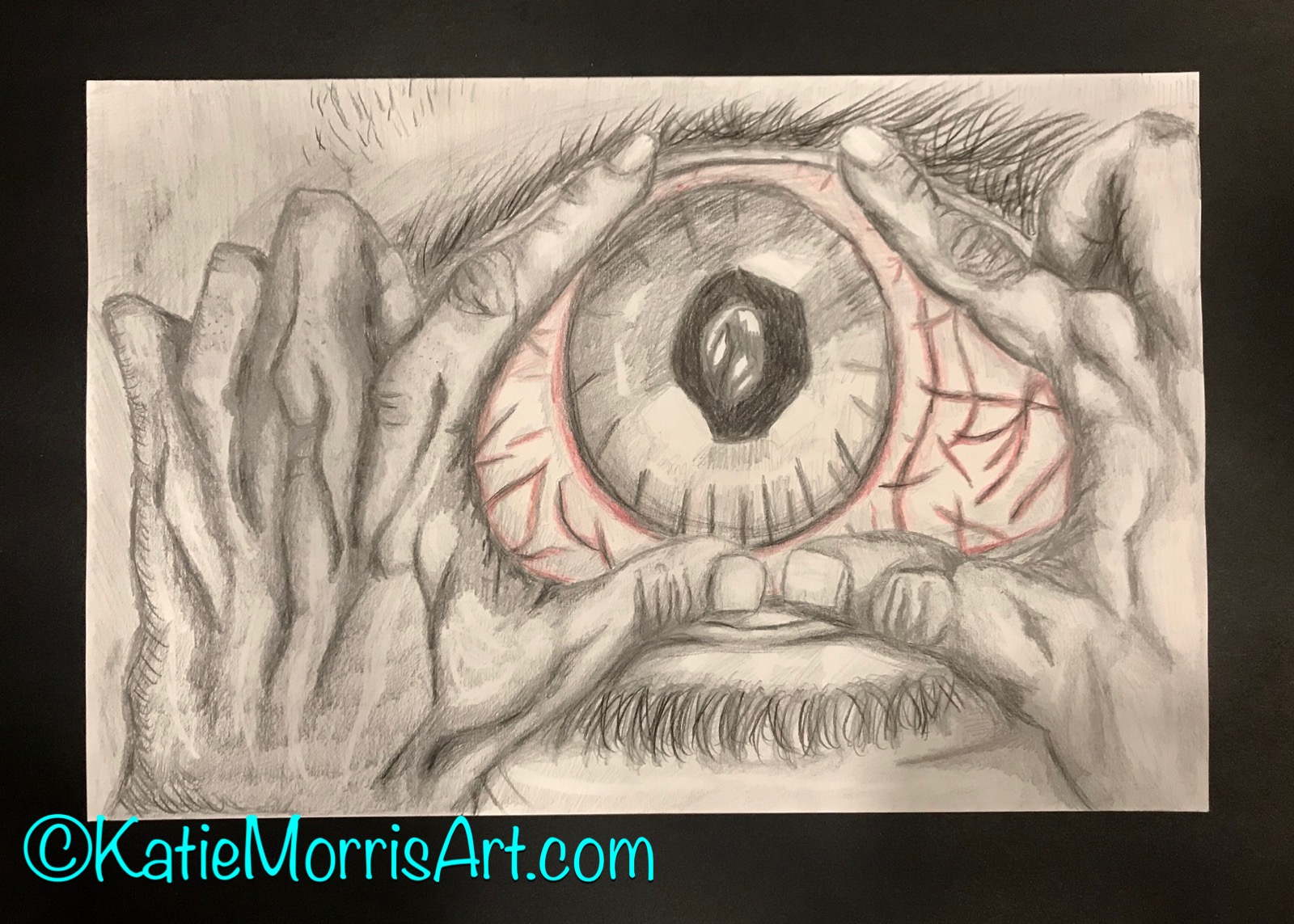
Teaching 8th graders to draw their hands from observation is one of my favorite growth measures. There are a lot of connections to art history like Leonardo's studies and the Creation of Adam on the Sistine Chapel ceiling, plus we know that learning to observe and really look at something is a skill that carries over into other non-art areas. Hands are something that most kids assume they "can't" draw and avoid, so teaching them that with practice they CAN learn these drawing skills help them to see that you can grow and improve in art- it's not just something you're born with or not.


I am always blown away from the growth we see in this unit. I start by asking the students to draw their hands from observation with no help as a pre-assessment. Next, we spend a couple of days doing "drawing on the right side of the brain" exercises like blind contour, continuous line, and non-dominant hand drawings to get the students to slow down and look carefully. Truthfully, those drawings stress some students out so I always emphasize that it's not about it how the drawing looks, it's about how YOU are looking.
After that, I draw my hand to demonstrate different techniques for measurement and comparison to get proportions correctly. I talk about what I'm looking at as I draw. The students spend a day or sometimes two working on a contour line drawing of one of their hands, however they would like to pose it, before I demonstrate rendering techniques. 
This year the students were especially into their drawings and wanted to really push the creativity so we updated the rubric for the growth measure to include creativity.
When the hand drawings are complete, we switch gears and observe our hands in three dimensions by sculpting them out of clay. The technique we use is 1:1, starting with a slab of clay about as thick as your hand, tracing, and then carving away to match what you observe.
Most students chose to stain their hands with red iron oxide but they were also free to use glaze or oil pastels and India Ink.
Here are the 2D and 3D hands in the display case!

Wednesday, September 11, 2019

PreK Lilacs

One time I read an article that was about how to teach a child to draw. Rather than follow step by step directions which teach one way to draw one thing, you spend some time activating their thinking by talking about what you notice in the thing you are observing. It was an awesome article and I hope I can find it again someday. That is the process we used for these PreK lilac watercolor paintings. The students and I talked about what we noticed in the lilacs and then they painted, first the stem, then the flowers. For simplicity's sake since we were nearing the end of the school year and had one day to finish the paintings, I gave each student just a purple and a green prang watercolor well instead of a whole set of paints.


We use ice cream buckets or coffee containers for cleaning brushes when painting. They are much less likely to spill than smaller cups and they are big enough that I can pretty much get by with putting one in the center of each table for students to share.
Here are the finished paintings from my PreK artists!

Saturday, September 30, 2017

Showing Growth- 8th Grade Observational Hand Drawings

For one of my growth measures this year I decided to focus on observational drawing with 8th graders. Observation is obviously an important skill in the art room and across the curriculum, and drawing from life is a skill that most students could improve upon.
I started by asking the students to draw one of their hands without any other instruction from me. I let them work as long as they wanted and for most that was maybe 15-20 minutes. I collected the "pre" drawings and then we moved on to some drawing exercises like continuous line drawing, blind contour drawing, and drawing with the non-dominant hand, that are supposed to help students practice slowing down, looking carefully, and translating what they see into what they draw.

Oooooh the whining! This particular group of students spends a lot of time saying "I can't do it" and "I'm not an artist". My response is always that "I'm not a mathematician but I can still do math!" It was pretty frustrating to battle that fixed mindset so at the beginning of the next class period we had a pep talk before any artwork was pulled out. About 2/3 of my class (16 boys and 3 girls total) is on the football team and that is one of the biggest priorities in their lives. I drew a lot of comparisons between art class and football practice and told them that art CAN BE LEARNED, it's not something you're just good at or not. I said that I'm not great at throwing a spiral, but if I practiced I could get better. Probably not as good as the starting quarterback, but I could improve MY skills and show growth. I reminded them that my goal for them is to approach art like they approach football- listen to the coach, take the advice, practice, and improve. After that their attitudes were significantly better!
I demonstrated drawing my hand, and shared some of my little "tricks" (that aren't really tricks) for drawing knuckles, creases, etc. and measuring proportions.  The students had a few days to draw their hand and apply what they'd learned. Since some got their contours drawn faster than others, we also reviewed graphite rendering. I was really pleased with their progress and I think the students were surprised to see the comparison from pre and post!
I really hate rubrics but since evaluators usually want quantitative data over qualitative, I scored the following categories with this scale:
"Below Standard- 1    Approaching Standard- 2    Meets Standard- 3    Exceeds Standard- 4".

Scale: The proportions are correct- the sizes of parts of the hand are correct when compared to other parts.

Observation: The hand is drawn accurately and attention was paid to details.

Craftsmanship: It is evident the student put care into the work to make it as good as it can be.

The document I will submit has an explanation of who and why, a copy of the rubric, a chart showing scores and percentage of growth, and because I'm visual, a graph and comparison photos.

Sunday, May 21, 2017

TAB & Seasonal Artwork

One thing that people say they would miss in a TAB classroom is the traditional seasonal projects that students, staff, and families look forward to. I just wanted to share that festive artwork can still come out of choice-based classrooms! 
Last October (yes, I am suuuuuuper behind on blogging) I saw a bag of some cool little pumpkins in the produce section and bought them thinking that some students might be interested. I used the pumpkins for a demo in my 1st grade class, showing how I look at the individual sections instead of drawing a circle, and that observation helps me get the overall form drawn more correctly. I went ahead and reviewed some tempera techniques since students had been asking to paint and then I gave the students the option of taking a break from whatever they had been working on to draw or paint pumpkins or to continue with their own work. All but one student chose to paint a pumpkin. Their grade had recently been on a field trip to a pumpkin patch so there was a lot of excitement. 
I helped distribute requested paint colors and spread out the pumpkins for tables to share and then let students work. Some covered the whole surface of their papers with paint and some were satisfied after practicing the drawing. Some added scenery or turned their pumpkins into jack-o-lanterns and some left the pumpkins simple. The students used a traditional subject for fall art classes, but they chose how to engage with it and were absolutely delighted! I think the moral of the story here is that you don't have to "give up" special things that are important in your school community to TAB. It's about honoring the students as artists- giving them the choice and the voice to do it their way.

Bonus- if you like to incorporate other content areas, I found a great book at our local library that has estimation and counting in it- How Many Seeds in a Pumpkin by Margaret McNamara. If I had more time with the students we could have cut up the pumpkins when we were finished to see how many seeds they have.
I need to remember that there are nice display cases across from the 1st grade classrooms and take advantage of it! My classroom is at the high school so I don't always remember.

One of my friends started using TAB with her youngest students last year. She does a good job of putting out challenges in her centers and she has had some really successful themes! You can see more of what she's up to on her Facebook page or her blog, Ag Wife Artist Life