Showing posts with label observational drawing. Show all posts

Tuesday, December 29, 2020

7th Grade Art of Conservation

Every year my 7th grade class, which runs second semester, makes artwork for either the Jr Duck Stamp Program or the State Fish Art Contest. Both programs teach about conservation through art and pull in a lot of science. We are able to cover a lot of drawing skills as well and it tends to build confidence so I love starting with it. 

On the first day of the unit, I ask students to draw a duck/goose or a fish and I don’t give much more instruction than that. I tell students it is their pre-assessment so I don’t offer any help or advice other than “do your best”. It’s so much fun to look at the before and after for each student at the end of the unit. It’s not usually the same animal but you can still see so much growth!


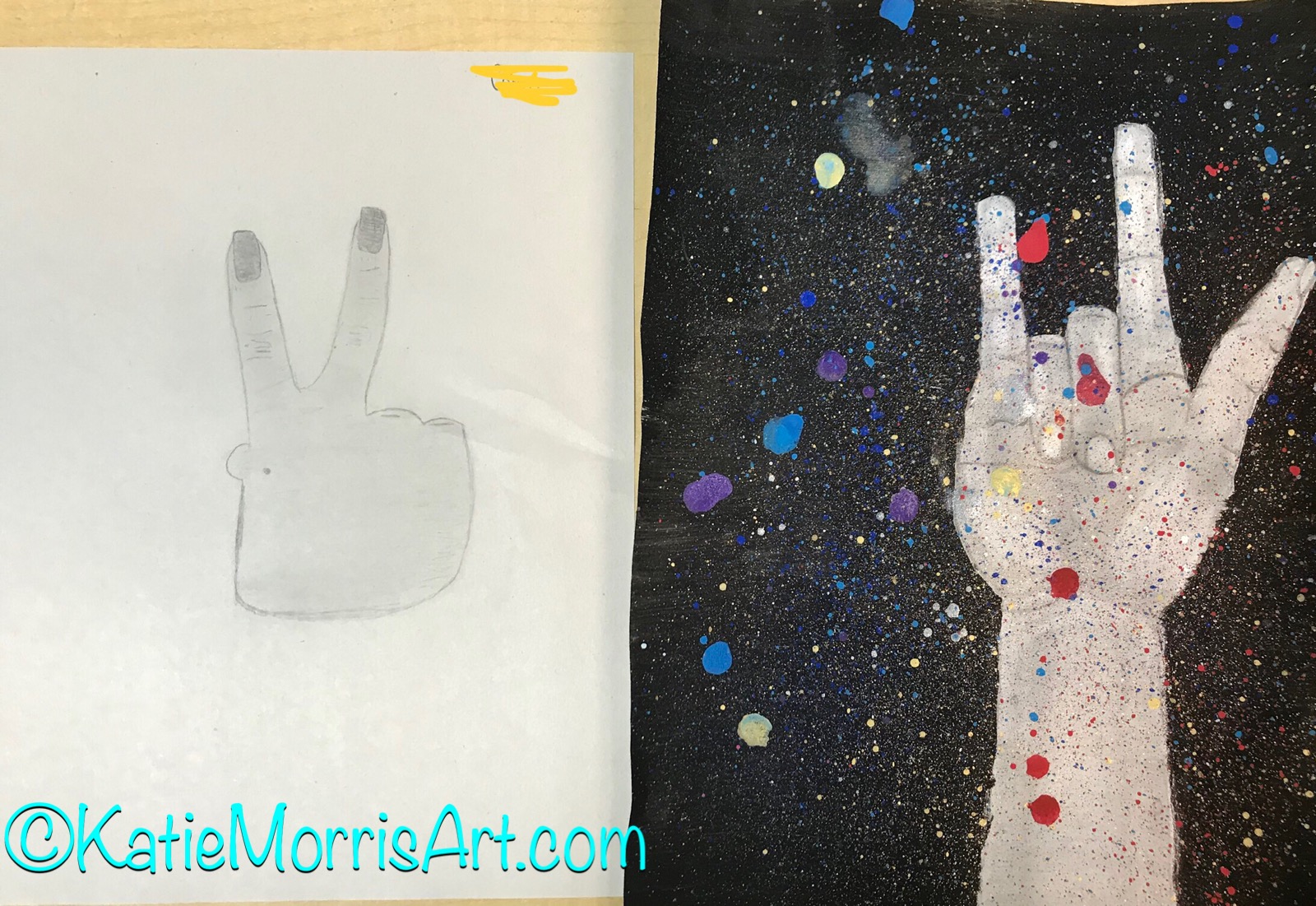
Here are the finished artworks from last January! The situation will be a little different this year but I'm going to figure out how to make it work.


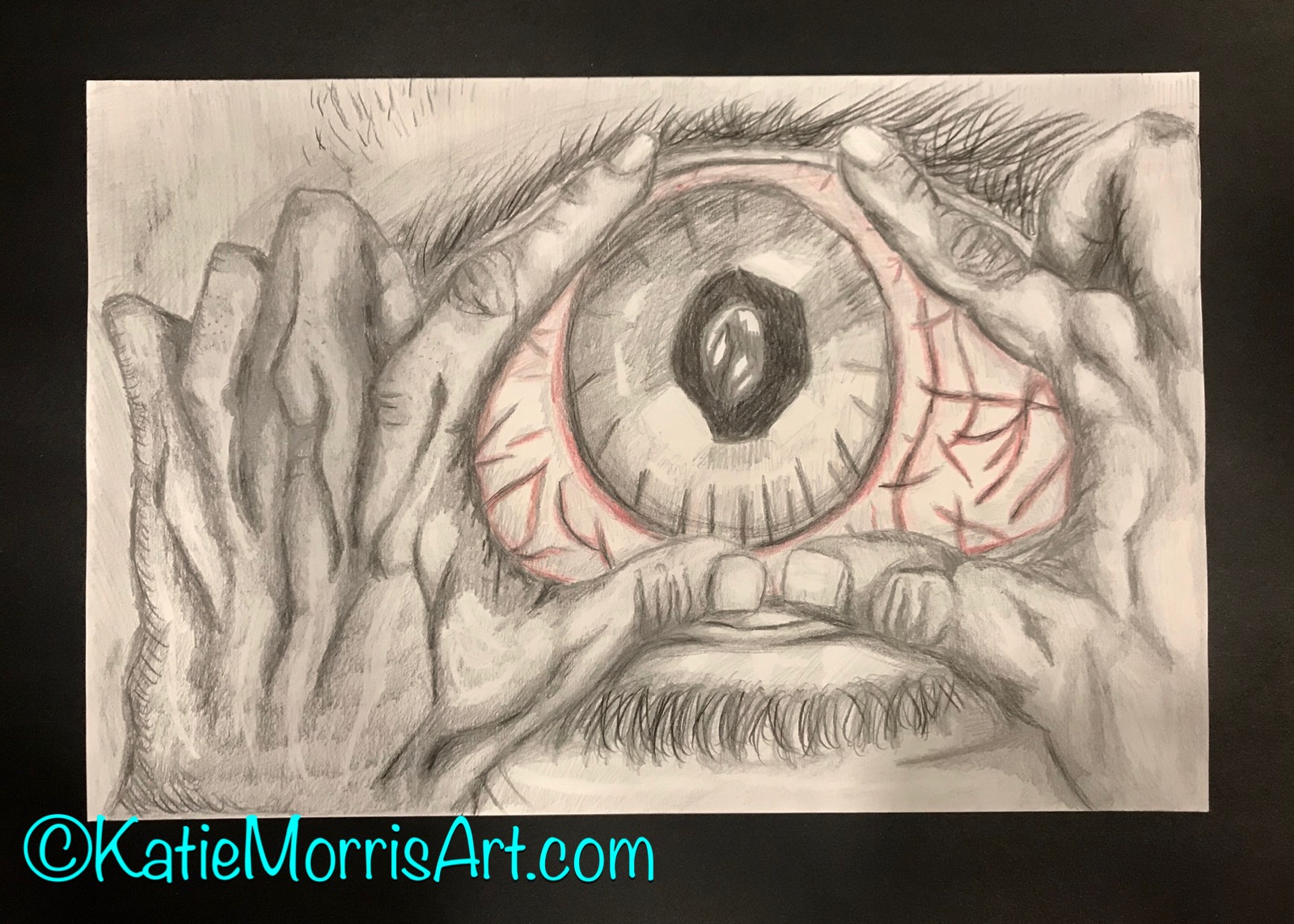
This drawing placed in the State Fish Art Contest last year!

Sunday, November 17, 2019

8th grade Hand Observations


Teaching 8th graders to draw their hands from observation is one of my favorite growth measures. There are a lot of connections to art history like Leonardo's studies and the Creation of Adam on the Sistine Chapel ceiling, plus we know that learning to observe and really look at something is a skill that carries over into other non-art areas. Hands are something that most kids assume they "can't" draw and avoid, so teaching them that with practice they CAN learn these drawing skills help them to see that you can grow and improve in art- it's not just something you're born with or not.


I am always blown away from the growth we see in this unit. I start by asking the students to draw their hands from observation with no help as a pre-assessment. Next, we spend a couple of days doing "drawing on the right side of the brain" exercises like blind contour, continuous line, and non-dominant hand drawings to get the students to slow down and look carefully. Truthfully, those drawings stress some students out so I always emphasize that it's not about it how the drawing looks, it's about how YOU are looking.
After that, I draw my hand to demonstrate different techniques for measurement and comparison to get proportions correctly. I talk about what I'm looking at as I draw. The students spend a day or sometimes two working on a contour line drawing of one of their hands, however they would like to pose it, before I demonstrate rendering techniques. 
This year the students were especially into their drawings and wanted to really push the creativity so we updated the rubric for the growth measure to include creativity.
When the hand drawings are complete, we switch gears and observe our hands in three dimensions by sculpting them out of clay. The technique we use is 1:1, starting with a slab of clay about as thick as your hand, tracing, and then carving away to match what you observe.
Most students chose to stain their hands with red iron oxide but they were also free to use glaze or oil pastels and India Ink.
Here are the 2D and 3D hands in the display case!

Monday, March 19, 2018

Evidence of Growth: Observational Hand Drawings

For one of my growth measures this year, I decided to focus on observational drawing skills with my 8th graders. First, I asked the students to draw their hand without any other instruction. This served as the pre-assessment. The next couple of class periods were spent on drawing skill builders like continuous line drawings, blind contour drawings, and even drawing with the non-dominant hand to try to get students to slow down and look closely.

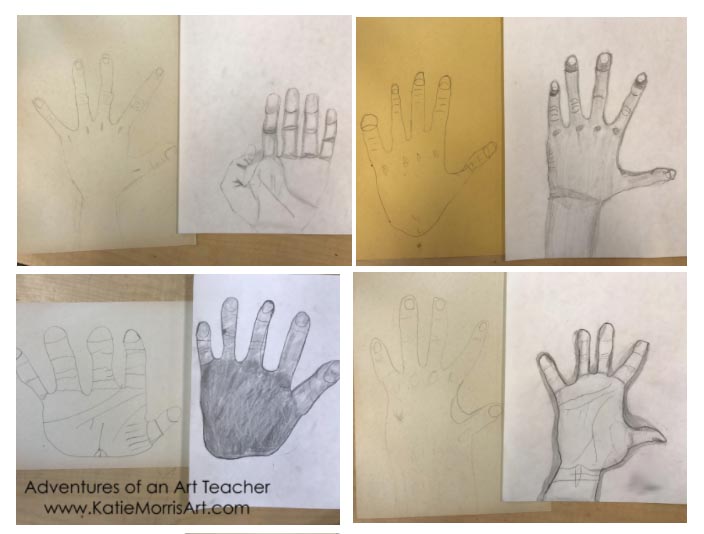
After the practice and a few pep talks given to my class about how art is a skill that CAN be learned, I demonstrated drawing my own hand from observation, sharing some tips on measuring and comparing proportions, and later demonstrated shading, before the students started the post-assessment of drawing their hand from observation applying what they'd learned.

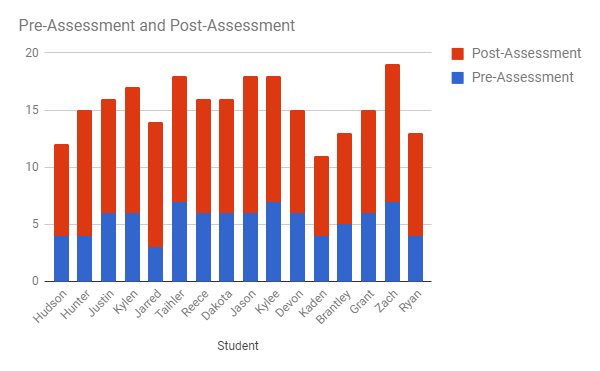
I used a simple rubric to score the pre and post assessment drawings so that I could give numerical evidence of growth. It's so easy for us to see improvement but administrators tend to like numbers. The document I turned in had a section about why observational drawing is important, and explained the process from pre-assessment, instruction, post-assessment, and then the evidence. I included a graph and a chart with scores before and after as well as percentage of growth. Even though numbers proved the growth, I still included some side by side photographs at the bottom of the document, which my principal said he appreciates seeing.

Here is a copy of the document I turned in, except with student names covered and replaced.

Importance: Observational drawing is a foundational skill for many art media and processes and the benefits from the studio habit of “observation” carry over into many non-art activities and vocations. Hands are one of the parts of the figure that students tend to avoid or struggle to draw so instruction in it now will help students feel more comfortable with the task in their future work.

Pre-Assessment: The students were asked to observe and draw their own hand without any prior instruction. The work was assessed with the following rubric.

Below Standard- 1 Approaching Standard- 2 Meets Standard- 3 Exceeds Standard- 4
Student:
Pre-Assessment
Post-Assessment
Scale: The proportions are correct- the sizes of parts of the hand are correct when compared to other parts.


Observation: The hand is drawn accurately and attention was paid to details.


Craftsmanship: It is evident the student put care into the work to make it as good as it can be.


Growth:


Teaching: After the pre-assessment, the students practiced drawing hands with a continuous line drawing, a blind contour drawing, and drawing with their non-dominant hand, all activities which are supposed to help the artist slow down and look carefully. Next, the teacher demonstrated drawing her hand, shared tips for dealing with parts of the hand, and talked about proportions and measurement tools.

Post-Assessment: The students were asked to again observe and draw their own hand applying what was demonstrated. The work was assessed with the same rubric.


Student
Pre-Assessment
Post-Assessment
Growth
Growth %
a
4
8
4
200.00%
b
4
11
7
275.00%
c
6
10
4
166.67%
d
6
11
5
183.33%
e
3
11
8
366.67%
f
7
11
4
157.14%
g
6
10
4
166.67%
h
6
10
4
166.67%
i
6
12
6
200.00%
j
7
11
4
157.14%
k
6
9
3
150.00%
l
4
7
3
175.00%
m
5
8
3
160.00%
n
6
9
3
150.00%
o
7
12
5
171.43%
p
4
9
5
225.00%

Photos of Pre and Post-Assessment Comparisons
(Pre-Assessment Drawings are on the Left)


Saturday, September 30, 2017

Showing Growth- 8th Grade Observational Hand Drawings

For one of my growth measures this year I decided to focus on observational drawing with 8th graders. Observation is obviously an important skill in the art room and across the curriculum, and drawing from life is a skill that most students could improve upon.
I started by asking the students to draw one of their hands without any other instruction from me. I let them work as long as they wanted and for most that was maybe 15-20 minutes. I collected the "pre" drawings and then we moved on to some drawing exercises like continuous line drawing, blind contour drawing, and drawing with the non-dominant hand, that are supposed to help students practice slowing down, looking carefully, and translating what they see into what they draw.

Oooooh the whining! This particular group of students spends a lot of time saying "I can't do it" and "I'm not an artist". My response is always that "I'm not a mathematician but I can still do math!" It was pretty frustrating to battle that fixed mindset so at the beginning of the next class period we had a pep talk before any artwork was pulled out. About 2/3 of my class (16 boys and 3 girls total) is on the football team and that is one of the biggest priorities in their lives. I drew a lot of comparisons between art class and football practice and told them that art CAN BE LEARNED, it's not something you're just good at or not. I said that I'm not great at throwing a spiral, but if I practiced I could get better. Probably not as good as the starting quarterback, but I could improve MY skills and show growth. I reminded them that my goal for them is to approach art like they approach football- listen to the coach, take the advice, practice, and improve. After that their attitudes were significantly better!
I demonstrated drawing my hand, and shared some of my little "tricks" (that aren't really tricks) for drawing knuckles, creases, etc. and measuring proportions.  The students had a few days to draw their hand and apply what they'd learned. Since some got their contours drawn faster than others, we also reviewed graphite rendering. I was really pleased with their progress and I think the students were surprised to see the comparison from pre and post!
I really hate rubrics but since evaluators usually want quantitative data over qualitative, I scored the following categories with this scale:
"Below Standard- 1    Approaching Standard- 2    Meets Standard- 3    Exceeds Standard- 4".

Scale: The proportions are correct- the sizes of parts of the hand are correct when compared to other parts.

Observation: The hand is drawn accurately and attention was paid to details.

Craftsmanship: It is evident the student put care into the work to make it as good as it can be.

The document I will submit has an explanation of who and why, a copy of the rubric, a chart showing scores and percentage of growth, and because I'm visual, a graph and comparison photos.